


Thinning hair
Do you notice your hair feels less full than it used to? Thinning hair usually develops gradually, which is why it is often noticed late.
- Does your hair feel less full or thick than it did a few years ago?
- Is your scalp showing through more, particularly on top?
- Has your ponytail or braid become noticeably thinner?
- Does cut hair grow back more slowly and less densely?
The sooner the cause of thinning hair is established, the more precisely your hair density can be improved.
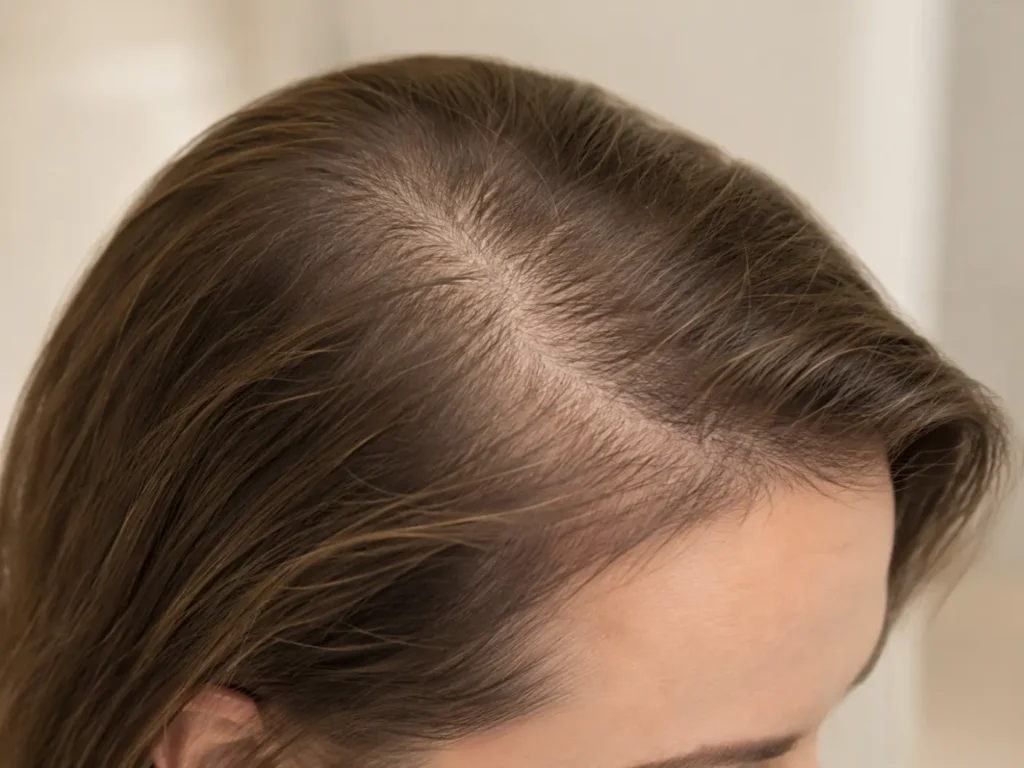
How do you recognise thinning hair?
Thinning hair usually develops gradually. These are the signs people notice most.
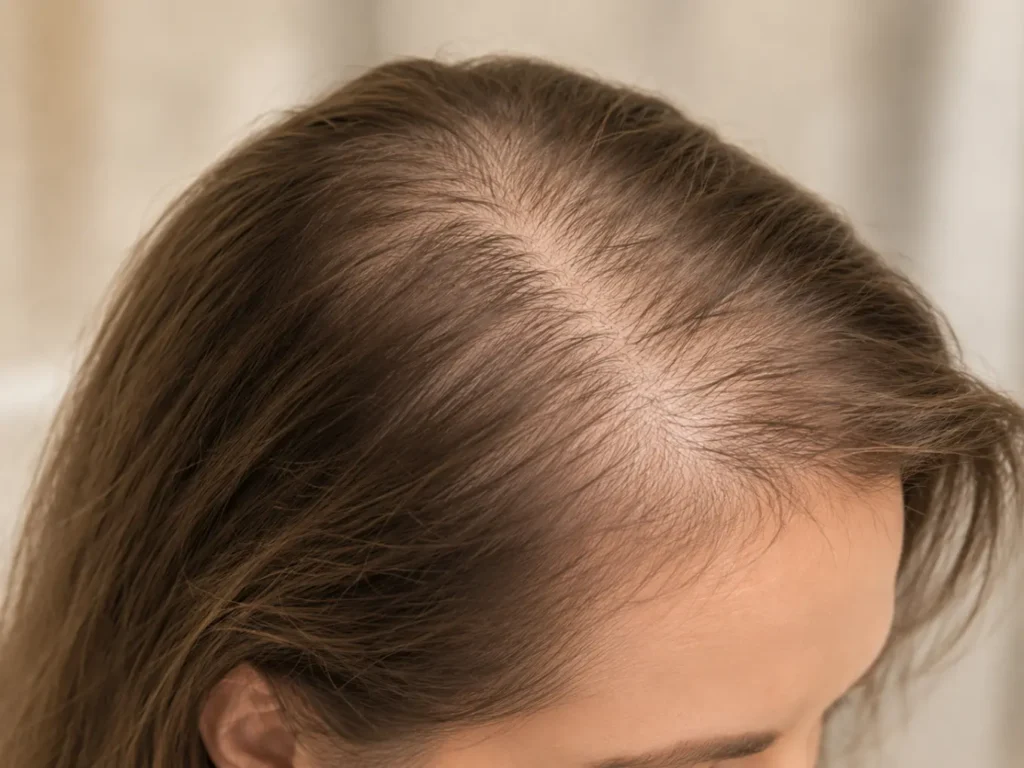
A widening parting
The parting becomes visibly wider as hair density slowly decreases.
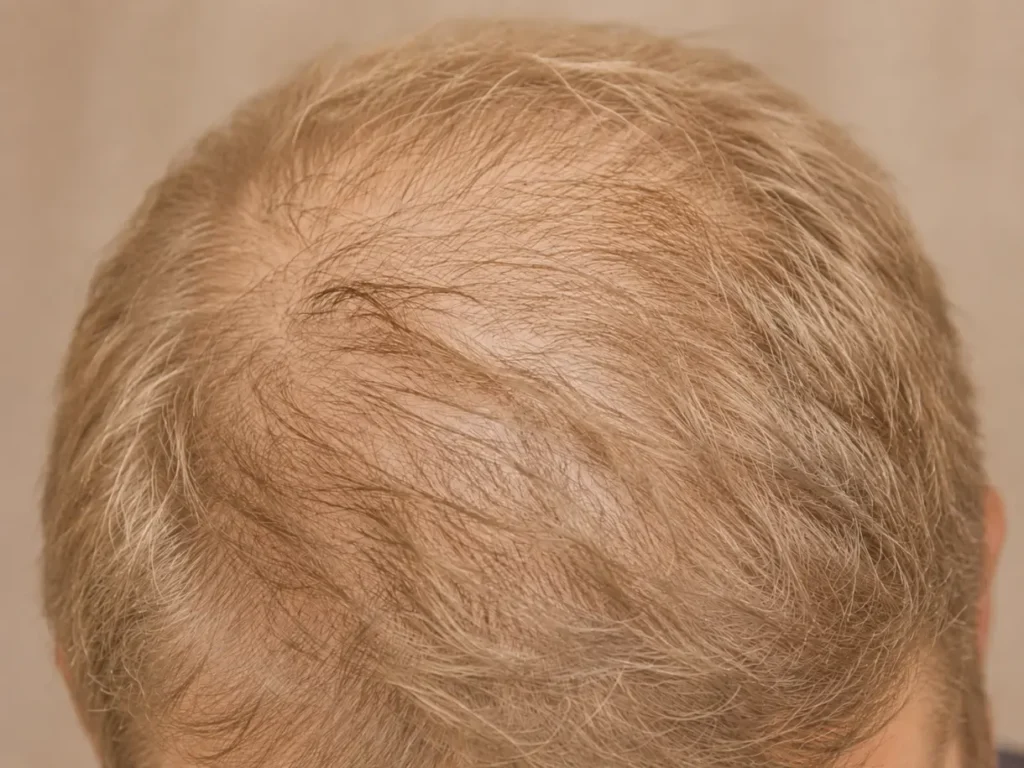
Less volume
The hair feels less full and lacks the natural body it used to have.
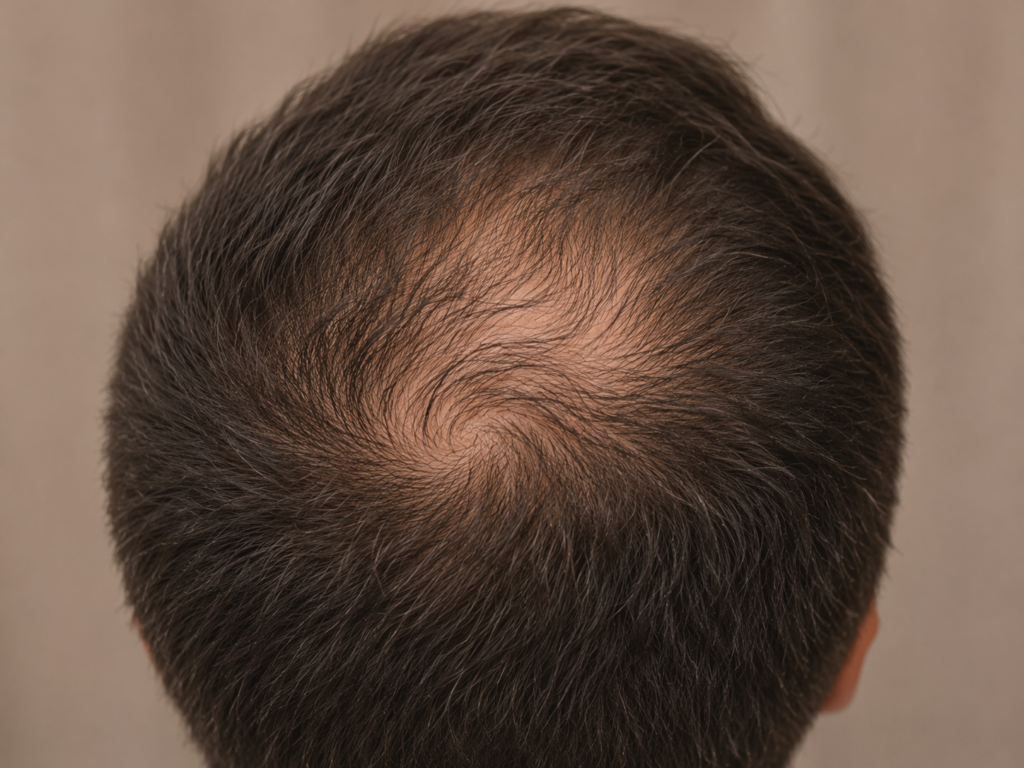
A visible crown
At the crown the scalp becomes increasingly visible, especially in bright light.
Finer hairs
The hairs become progressively finer and more fragile, making the hair look less dense.
What makes hair thinner?
Thinning hair rarely has a single, isolated cause. These four factors are the most common.
Reduced hair density
Fewer hairs per square centimetre create a sparser overall look, most visible at a parting or on top of the head.
Hormonal causes
Hormonal fluctuations, for instance around the menopause or a pregnancy, can disrupt the hair growth cycle.
Stress-related hair loss
Prolonged stress can push follicles into the resting phase sooner, which makes hair look thinner.
Nutritional deficiencies
A shortage of iron, vitamin D or other nutrients can slow hair growth and weaken the hair.
How we establish the cause
At Armeda Clinics you map out together with a specialist which of these factors plays a role in your case.
- Hair analysis Your hair density and scalp condition are examined in detail.
-
A personal conversation
Your complaints, medical background and lifestyle are discussed. - Blood values (if needed) If a nutritional deficiency is suspected, further testing may be advised.
- Tailored advice You receive a clear treatment plan that matches the cause of your thinning hair.
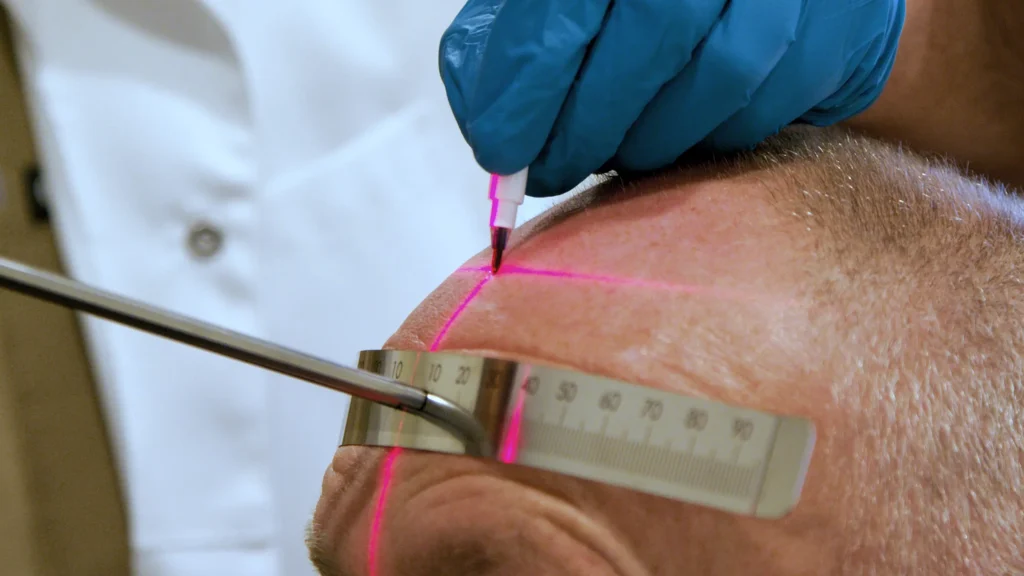
Why have it assessed early?
Thinning hair that is recognised early leaves more room to improve hair density before the process advances further. That way you avoid
Mesotherapie voor dun haar
For thinning hair, Armeda Clinics often opts for mesotherapy, supplemented with other treatments where needed.
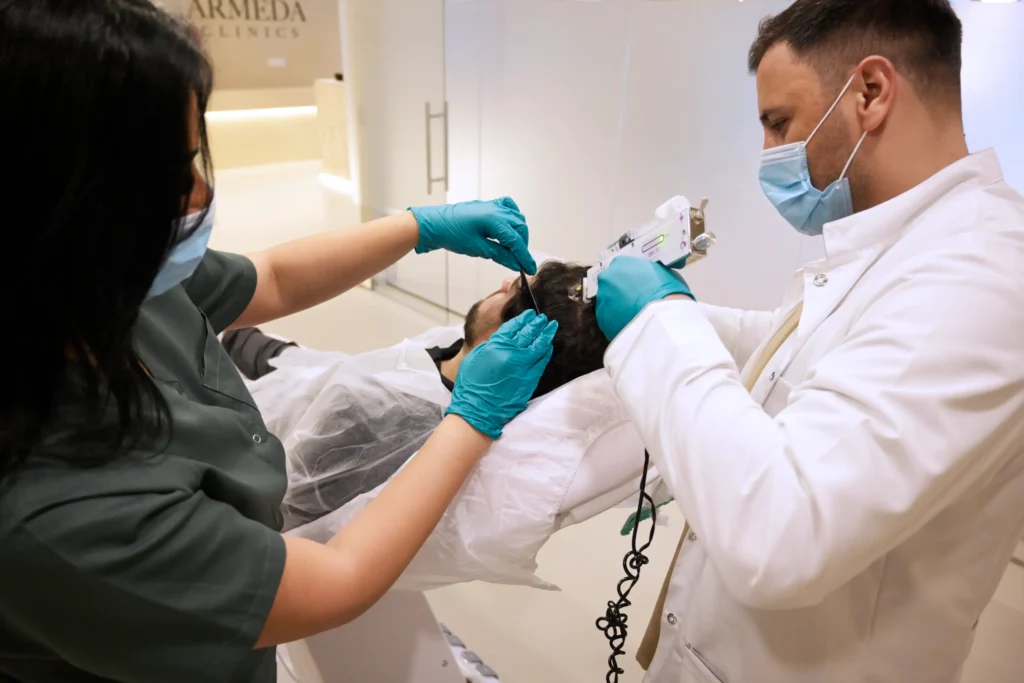
Mesotherapy & PRP
Targeted delivery of active ingredients to stimulate hair growth and noticeably improve hair density.

Medical guidance
Ongoing advice and follow-up, so you know which next steps suit your hair density.
Hair transplant
With more advanced hair loss, a FUE or DHI hair transplant can offer a lasting solution.
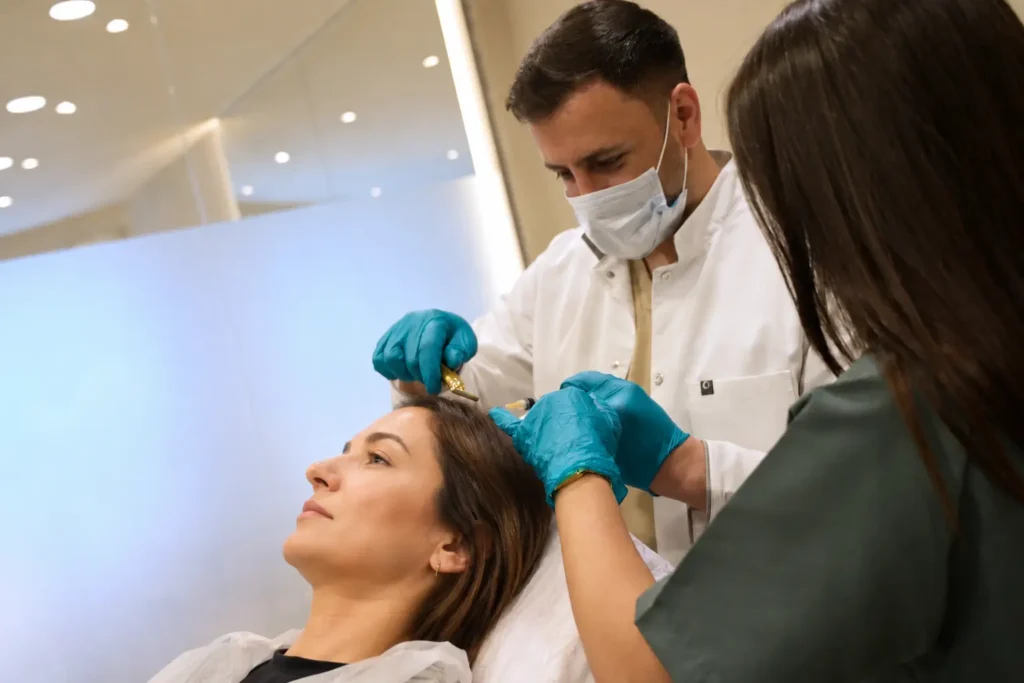
Hair transplant for women
An approach aimed specifically at diffuse thinning hair in women.
What clients often ask us
In many cases mesotherapy can improve hair density, provided the underlying cause is addressed.
Most people notice the first improvement after a few treatments, depending on the cause of the thinning.
No. Alongside any hereditary predisposition, hormones, stress and nutrition often play a role too.
Correcting a deficiency can contribute to recovery, but this is best assessed on the basis of your personal situation.
Unsure what is causing your hair to thin?
Book a no-obligation consultation at Armeda Clinics and receive personal advice about mesotherapy and other treatment options.