


Eczema on the scalp
Eczema on the scalp is a common complaint that often goes hand in hand with itching, flakes and red patches. Do you recognise the signs below?
- Do you suffer from red, irritated patches on your scalp?
- Do you see greasy or dry flakes, including beyond the hairline?
- Does your scalp itch regularly, even without an obvious trigger?
- Does the complaint keep coming back, despite a different shampoo?
If left untreated, eczema on the scalp can affect the condition of your hair, so a timely assessment is worthwhile.
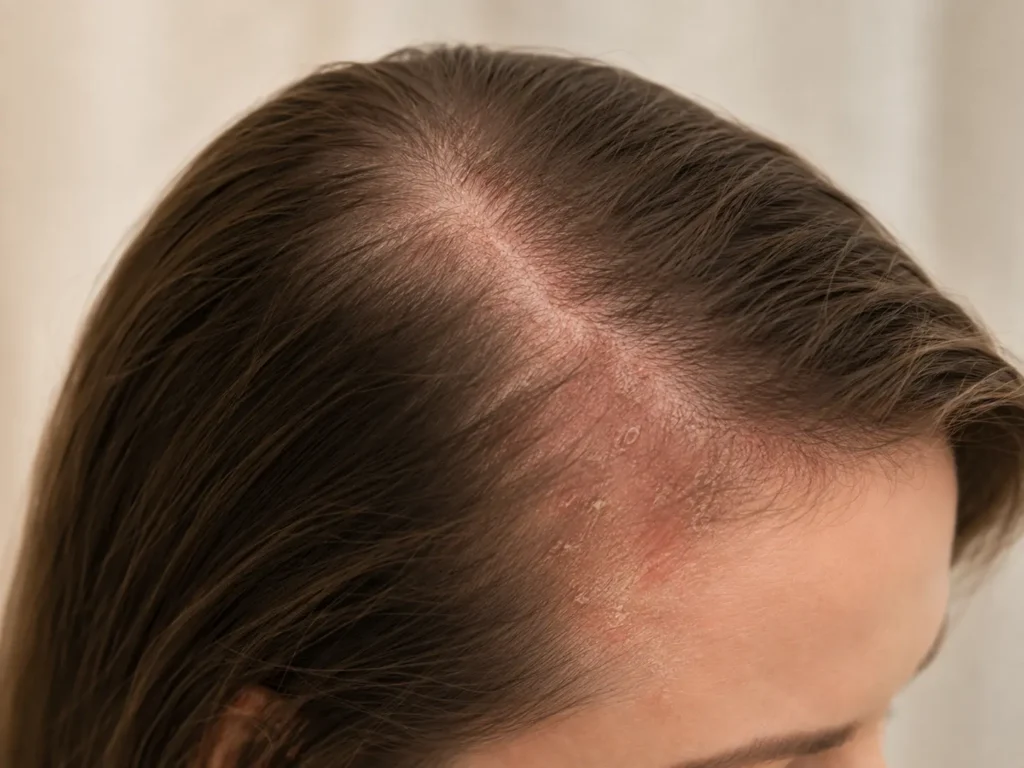
How do you recognise eczema on the scalp?
Eczema shows itself in various ways, often in combination with the following signs.
Seborrhoeic eczema
A common form of eczema with greasy flakes, often around the hairline, eyebrows and ears.
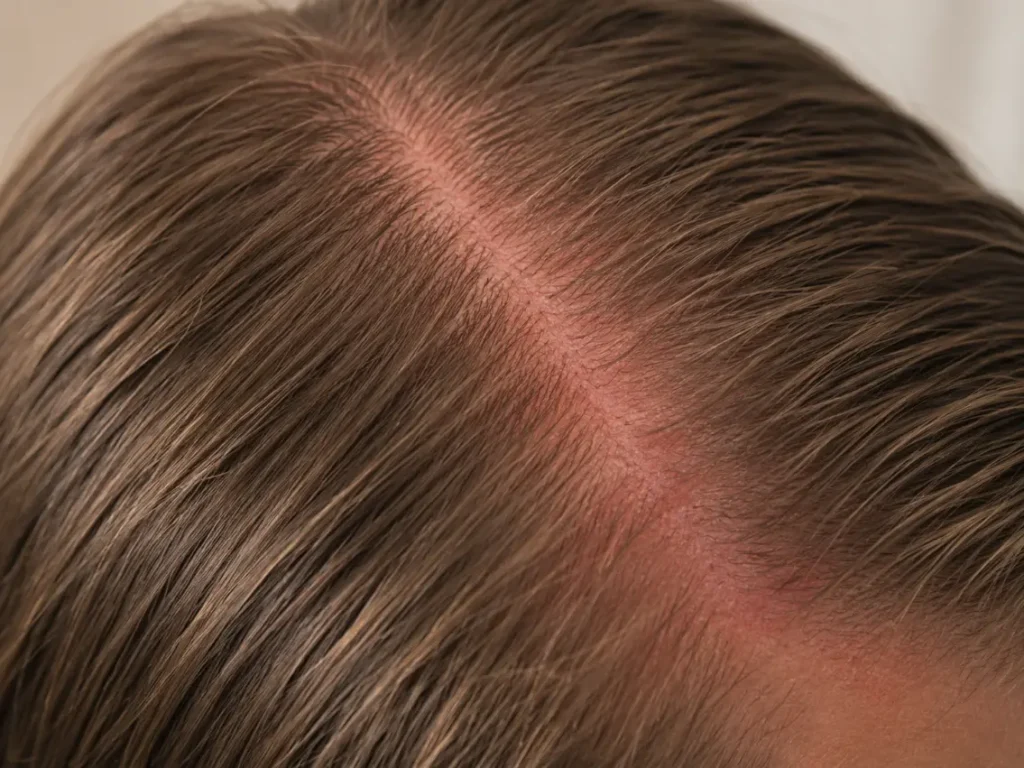
Red patches
Irritated, red areas on the scalp that can feel sensitive to the touch.
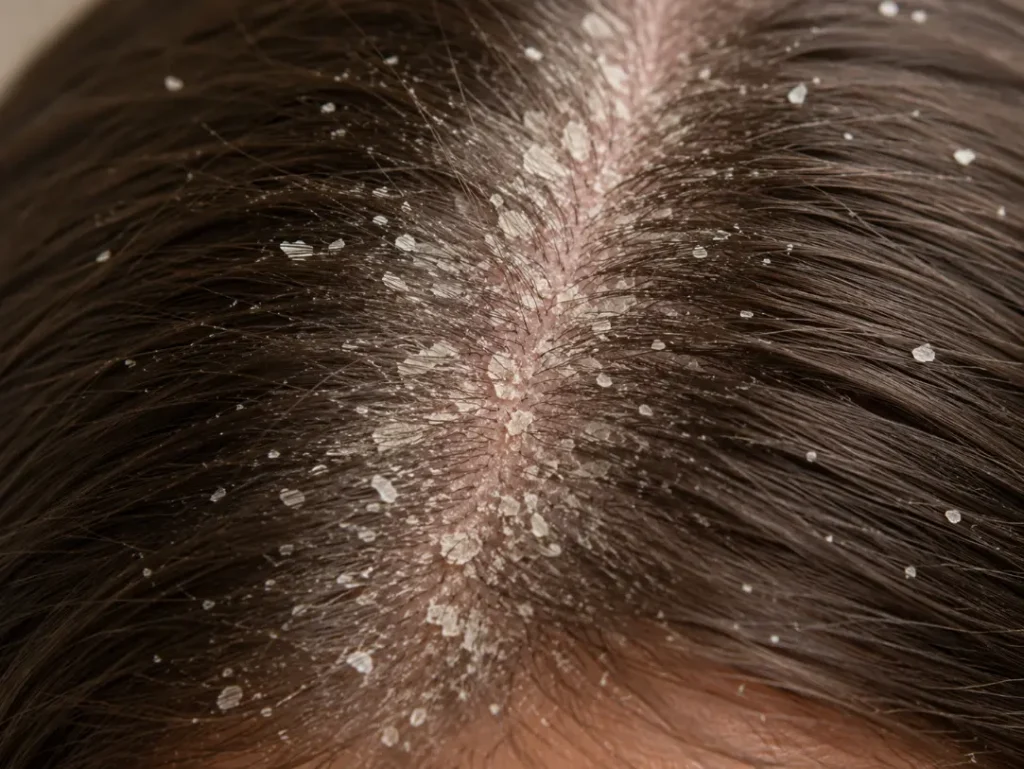
Flakes
Visible, sometimes greasy flakes that are left behind on clothing or pillows.
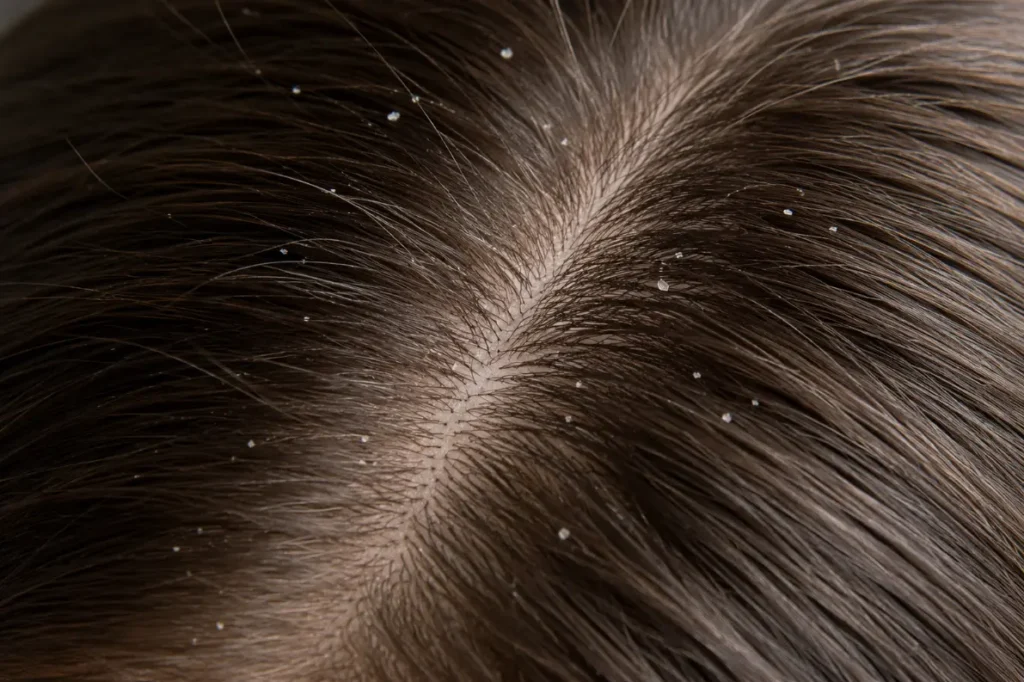
Itching
Persistent itching that often worsens with stress, heat or certain care products.
When is a specialist assessment advisable?
Eczema on the scalp is not always a cause for concern, but in the following situations an assessment is recommended.
Persistent complaints
If flakes, itching or red patches persist for more than a few weeks, despite care products.
Spreading
When the complaints spread to a larger part of the scalp or to the face.
Effect on your hair
If you notice that the scalp complaint goes together with thinning hair or hair loss.
No improvement
If regular shampoos and ointments help little or not at all.
How we establish the cause
At Armeda Clinics you map out together with a specialist which of these factors plays a role in your case.
- Scalp analysis The condition of your scalp, the degree of redness and irritation and the type of flaking are mapped out in detail.
-
A personal conversation
Your complaints, medical background and lifestyle are discussed. - Further examination (if needed) If the cause is unclear or other scalp problems are suspected, additional examination may be advised.
- Tailored advice You receive a clear treatment plan, suited to the cause of the eczema on your scalp.
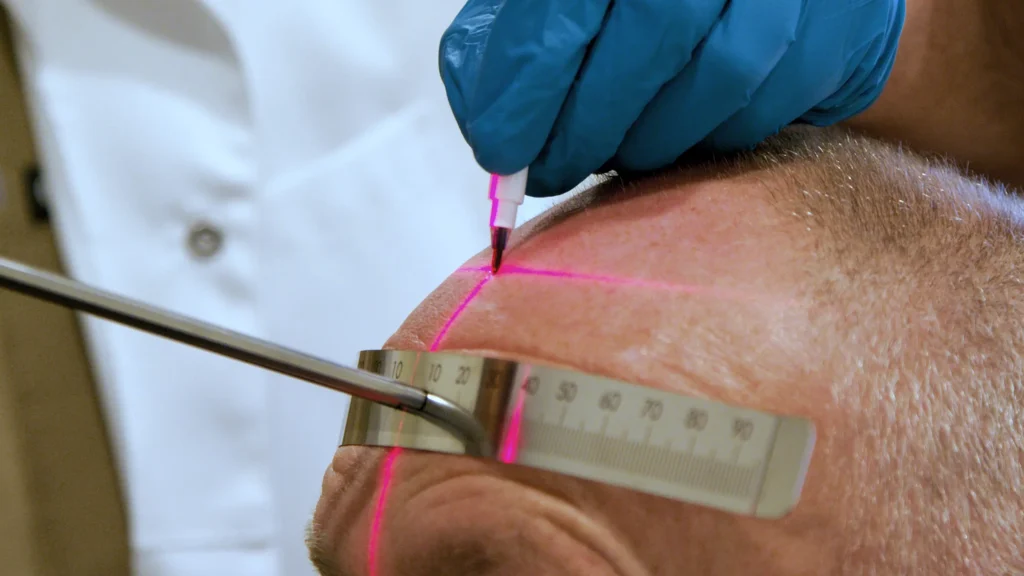
How is eczema on the scalp diagnosed?
During an assessment we look at the type of flaking, the degree of irritation and whether hair growth is being affected, so that you know what an appropriate next step is.
What can you do about eczema on the scalp?
Depending on the severity and cause of your eczema, we propose suitable advice or a treatment programme.

Medical guidance
Personal advice and follow-up, aimed at calming an irritated scalp.
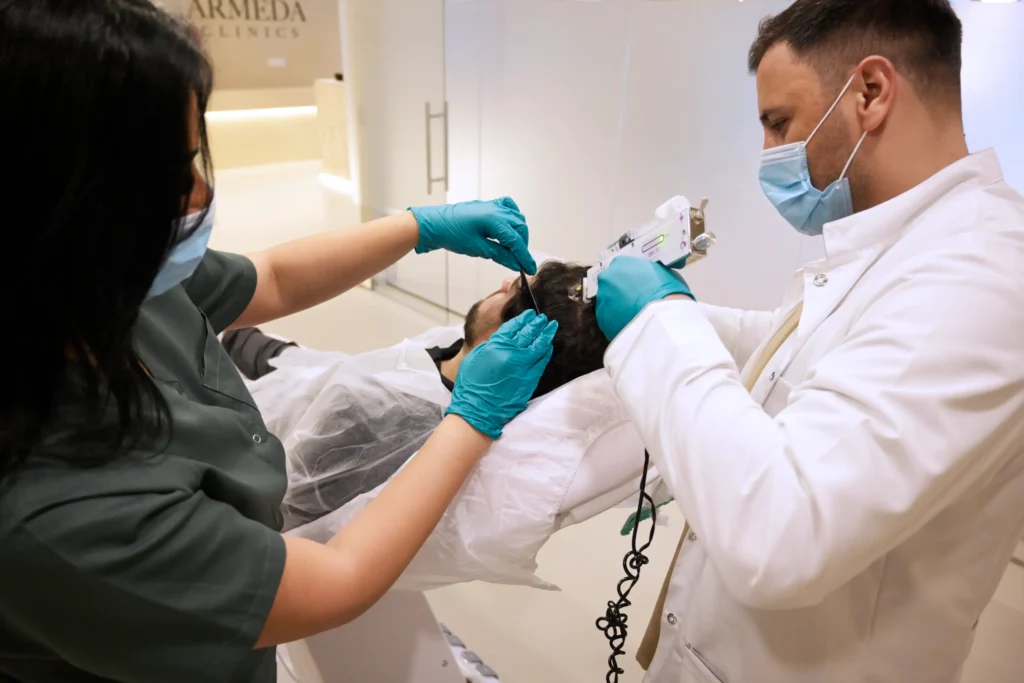
Mesotherapy & PRP
Supportive in the case of a weakened scalp and reduced hair density caused by long-term eczema complaints.
Hair transplant
In the case of permanent damage to the hair follicle, a hair transplant can be an option in the longer term.
What clients often ask us
No, eczema is not contagious; it is an inflammatory reaction of the skin.
With long-term, untreated complaints the hair follicle can weaken, which may contribute to hair loss.
Dandruff is mainly about flaking, whereas eczema often also brings red, irritated patches and itching with it.
Not always; with persistent complaints a targeted assessment is more useful than trying yet another product each time.
If the complaints persist for more than a few weeks or if you notice that your hair is being affected by them.
Unsure about eczema on your scalp?
Schedule a no-obligation consultation at Armeda Clinics and have your scalp assessed by a specialist.