


Hair loss caused by stress
A stressful period can translate into noticeable hair loss weeks later. Do you recognise the following?
- Have you started losing more hair after a stressful or life-changing period?
- Is your hair falling out spread across the whole scalp, without a clear spot?
- Do you see noticeably more hair in the shower, on your pillow or in your brush?
- Did the hair loss start a few weeks to months after the stressful event?
This pattern often fits telogen effluvium, a common and usually temporary form of hair loss caused by stress.
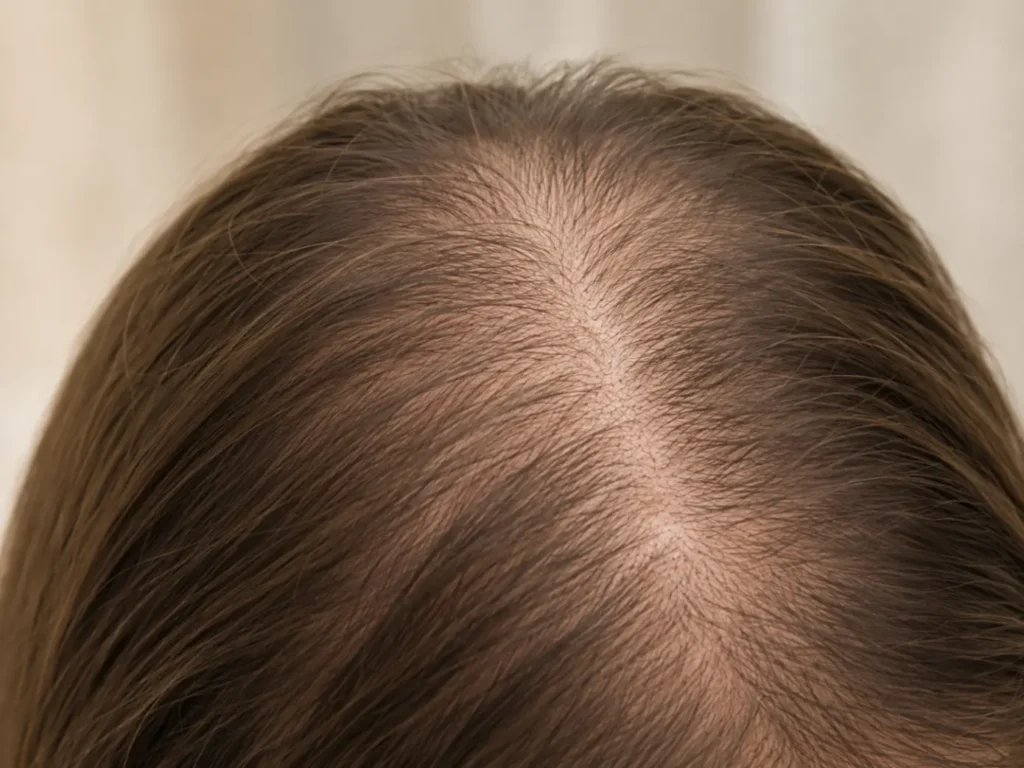
How do you recognise stress-related hair loss?
Hair loss caused by stress has a number of recognisable characteristics.
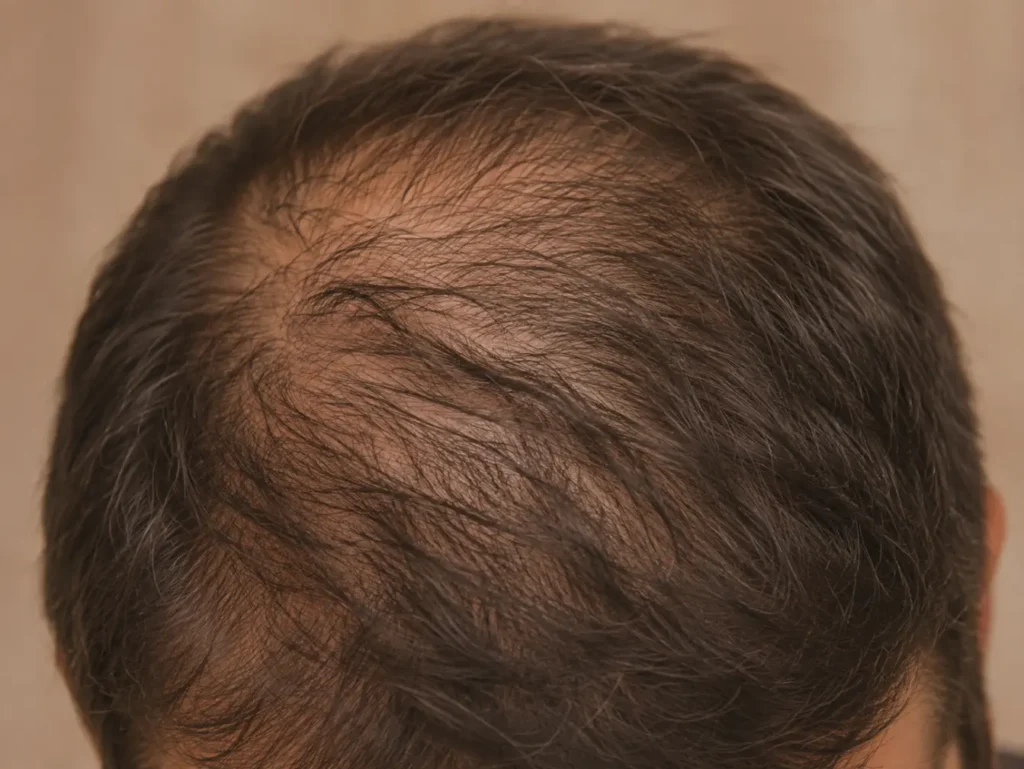
Telogen effluvium
A temporary form of hair loss in which many hair follicles enter the resting phase at the same time after a stressful period.
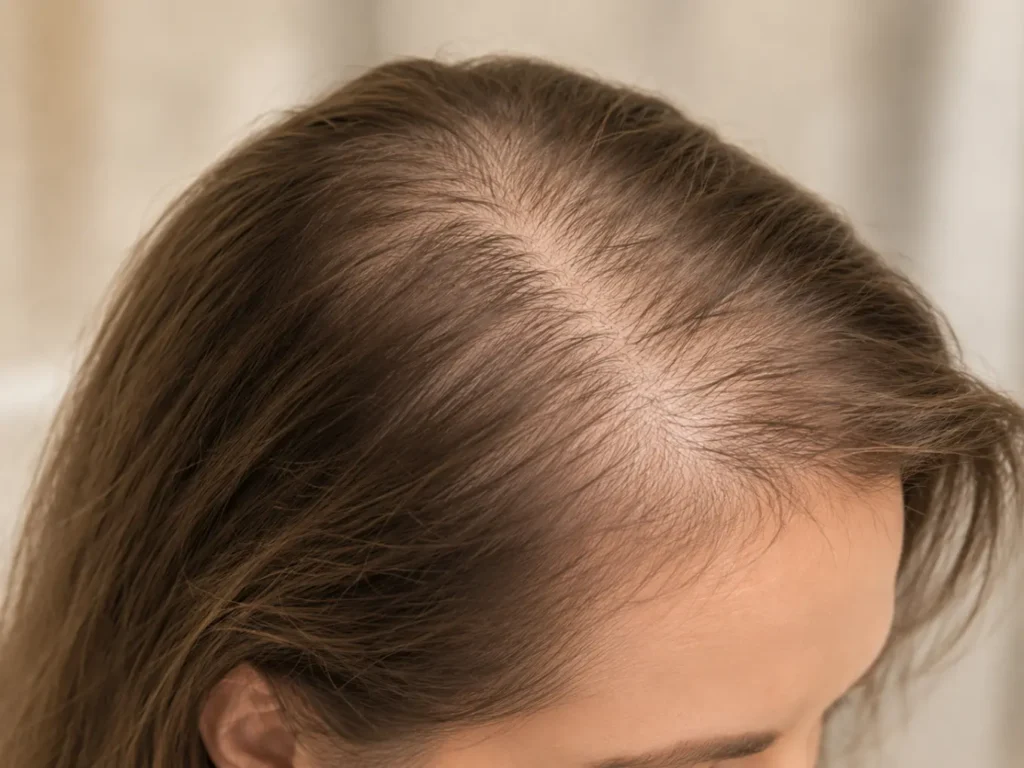
Diffuse pattern
The hair loss is spread across the entire scalp, rather than in one specific place.
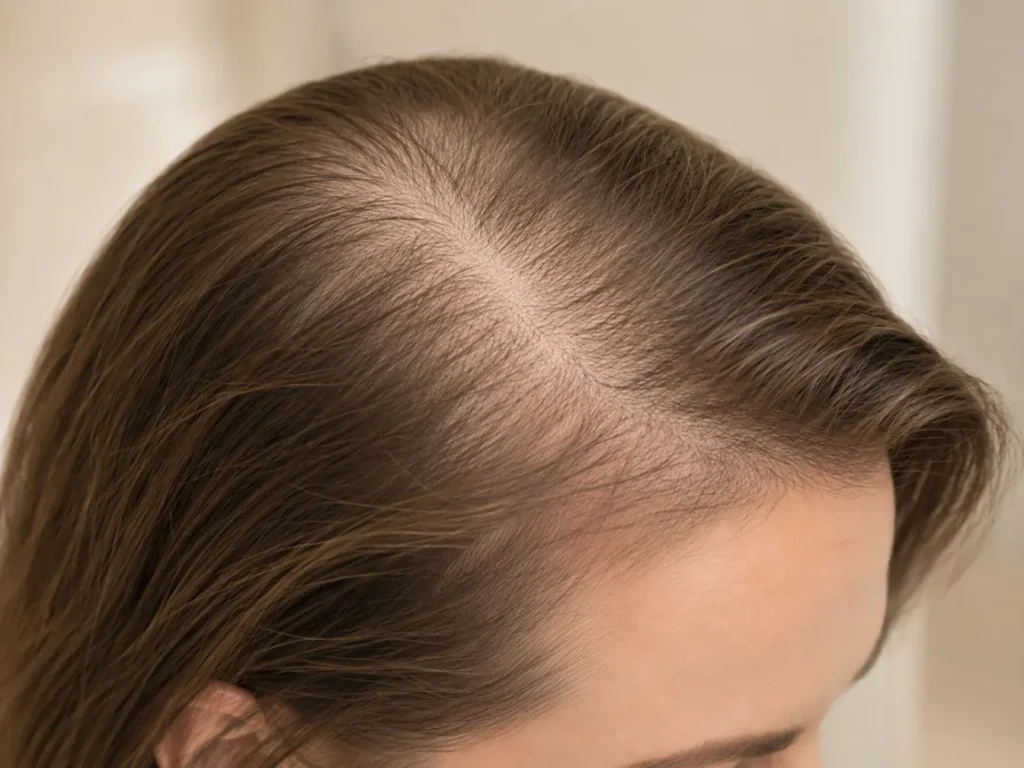
Delayed onset
The hair loss often only starts a few weeks to months after the stressful event.
Temporary in nature
In most people hair growth recovers by itself once the underlying stress subsides.
Scope for recovery from hair loss caused by stress
Although telogen effluvium often resolves by itself, you can support the process.
Reducing the source of stress
Where possible, it helps to reduce the underlying stress or manage it better.
Getting your nutrition up to level
Sufficient iron, protein and vitamins support a healthy hair growth cycle.
Allowing time to recover
The hair growth cycle needs several months to recover after a stressful period.
Supportive treatment
In some cases a targeted treatment can speed up the recovery of hair density.
How we establish the cause
At Armeda Clinics you map out together with a specialist which of these factors plays a role in your case.
- Hair analysis Your hair density, the link with periods of stress and the condition of your scalp are mapped out in detail.
-
A personal conversation
Your complaints, medical background and lifestyle are discussed. - Blood values (if needed) If a nutritional deficiency is suspected, further testing may be advised.
- Tailored advice You receive a clear treatment plan, suited to the factors behind your stress-related hair loss.
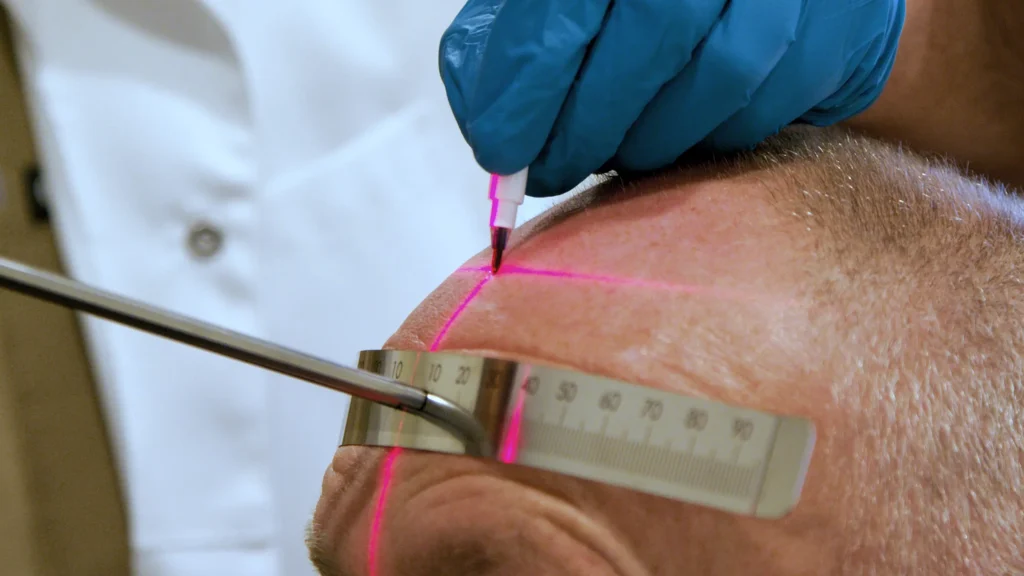
How is hair loss caused by stress diagnosed?
During an assessment we look at the pattern of hair loss and its timing in relation to any stressful events, in order to distinguish telogen effluvium from other causes.
Treatment options for hair loss caused by stress
Depending on the duration and severity of the hair loss, we propose suitable advice or a treatment programme.

Medical guidance
Personal advice and follow-up during recovery from stress-related hair loss.
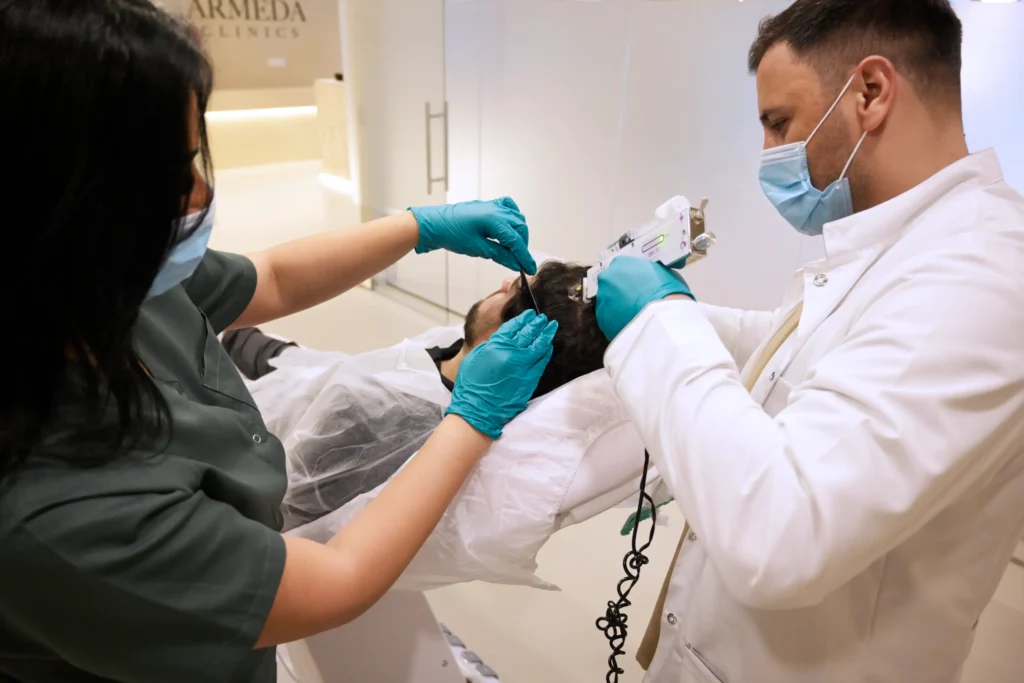
Mesotherapy & PRP
Can support the recovery of hair density after a period of telogen effluvium.

Hair transplant
Where thin areas persist after prolonged stress, this can be an option in time.
What clients often ask us
Telogen effluvium usually lasts a few months and often resolves by itself once the stress subsides.
In most cases it does, provided the underlying cause is addressed or diminishes.
The hair growth cycle reacts with a delay; follicles that shift to the resting phase only actually shed later on.
Sufficient iron, protein and vitamins support the hair growth cycle during recovery.
If the hair loss continues for longer than a couple of months or clearly increases.
Unsure whether stress is the cause of your hair loss?
Schedule a no-obligation consultation at Armeda Clinics and receive personal advice about recovery and treatment options.