


Dandruff and flakes
Dandruff is one of the most common scalp complaints, but not every form of flaking is the same. Do you recognise the following?
- Do you see white or yellowish flakes on your scalp or clothing?
- Does your scalp feel greasy, or actually dry?
- Does your scalp itch along with the flaking?
- Does the flaking keep coming back, despite an anti-dandruff shampoo?
Dandruff is usually harmless, but persistent or severe flaking can point to another scalp complaint that deserves attention.
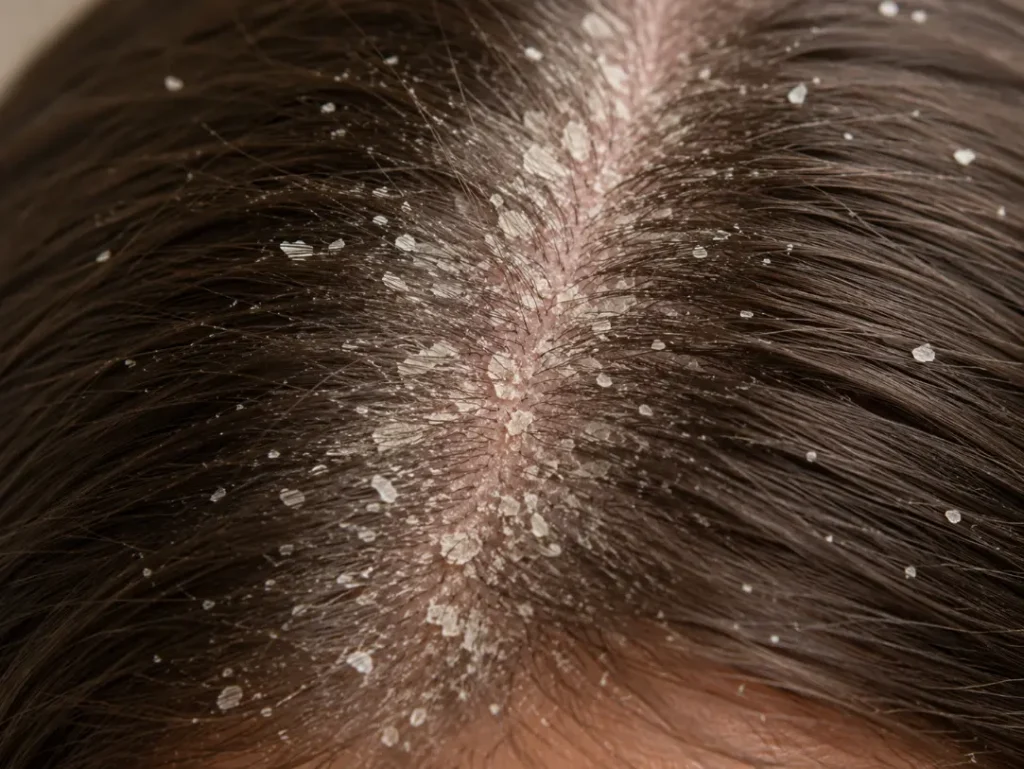
When is dandruff more than a matter of care?
In most cases dandruff can be managed well with the right care, but in some situations an assessment is advisable.
Persistent flaking
If dandruff keeps coming back despite a targeted shampoo, another cause may be at play.
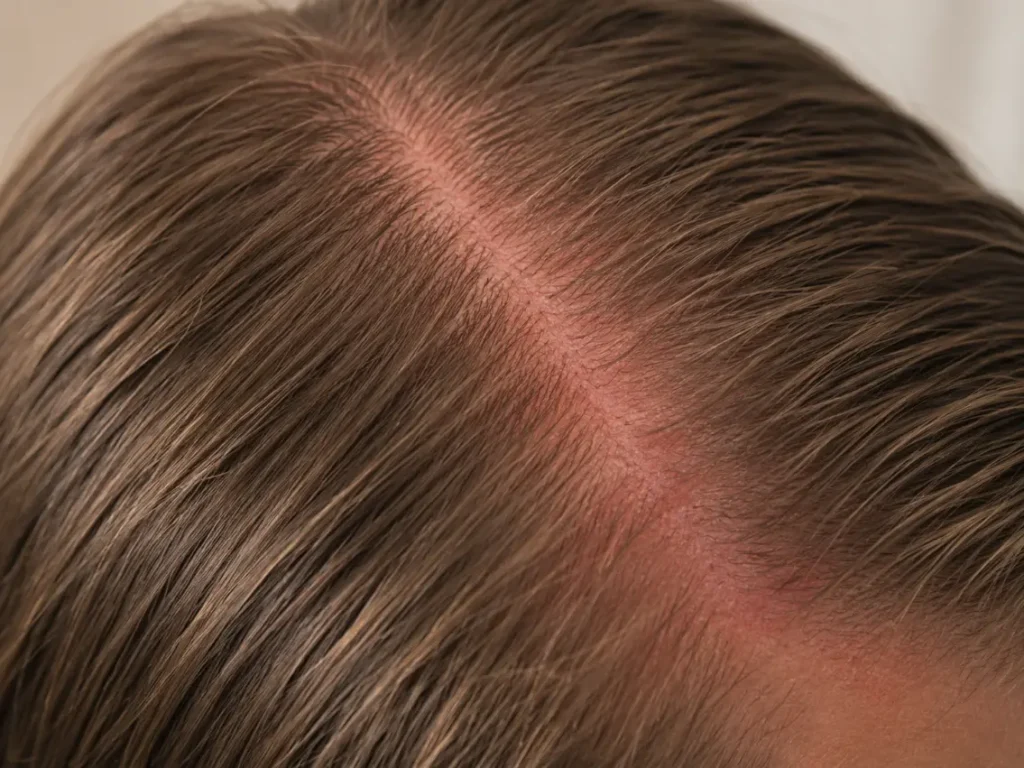
Combined with itching or redness
This can point to eczema or another scalp condition rather than ordinary dandruff.
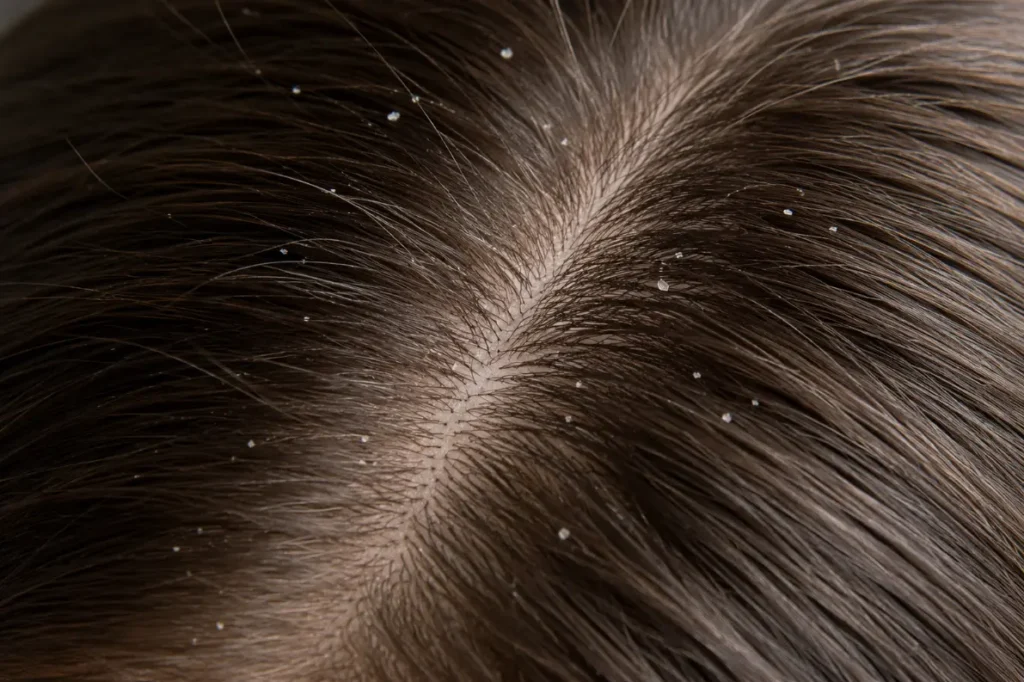
Effect on hair growth
When flaking goes together with thinning hair, a broader assessment is worthwhile.
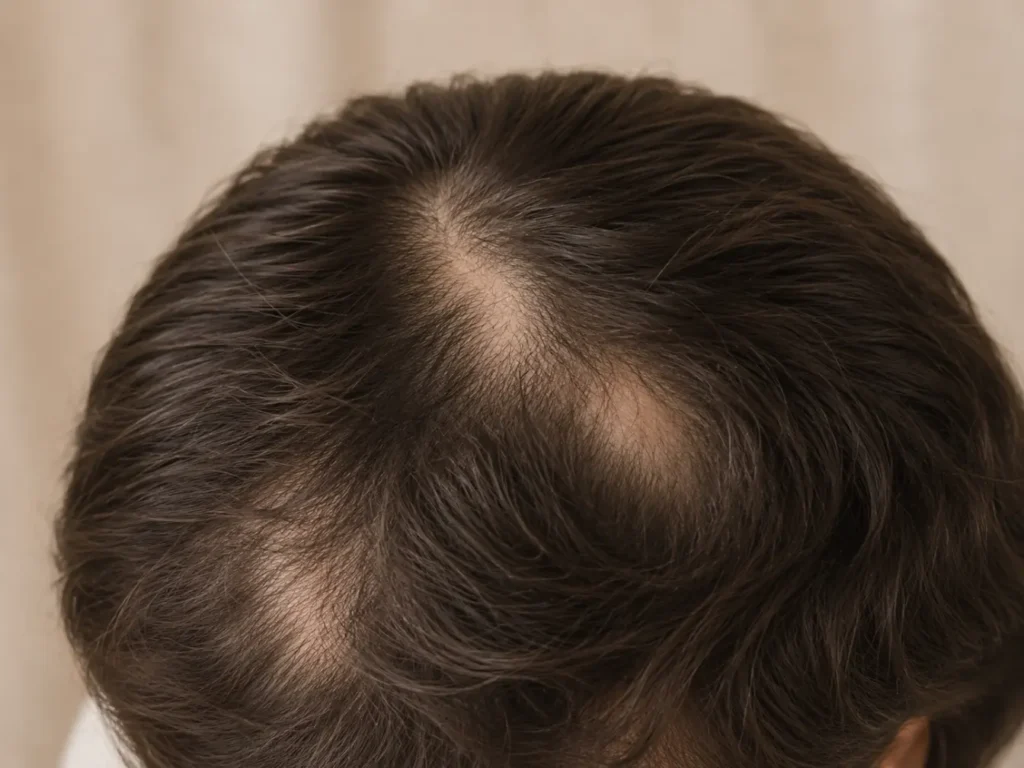
Spreading to the face
Flaking around the eyebrows or nose can point to seborrhoeic eczema.
What causes dandruff and flakes?
Flakes arise from various factors, each of which calls for a slightly different approach.
Causes of dandruff
A disturbed balance of yeasts on the scalp, combined with sebum production, often lies at the root of dandruff.
The difference between dandruff and eczema
Dandruff is mainly about flaking, whereas eczema often also brings red, irritated patches with it.
Effect on scalp health
Persistent flaking can keep the scalp out of balance and indirectly affect hair growth.
Dry versus greasy flakes
The type of flake gives an indication of the underlying cause and the right care.
How we establish the cause
At Armeda Clinics you map out together with a specialist which of these factors plays a role in your case.
- Scalp analysis The condition of your scalp, the type of flaking and any signs of irritation are mapped out in detail.
-
A personal conversation
Your complaints, medical background and lifestyle are discussed. - Further examination (if needed) If the cause is unclear or other scalp problems are suspected, additional examination may be advised.
- Tailored advice You receive a clear treatment plan, suited to the cause of the dandruff and flakes on your scalp.
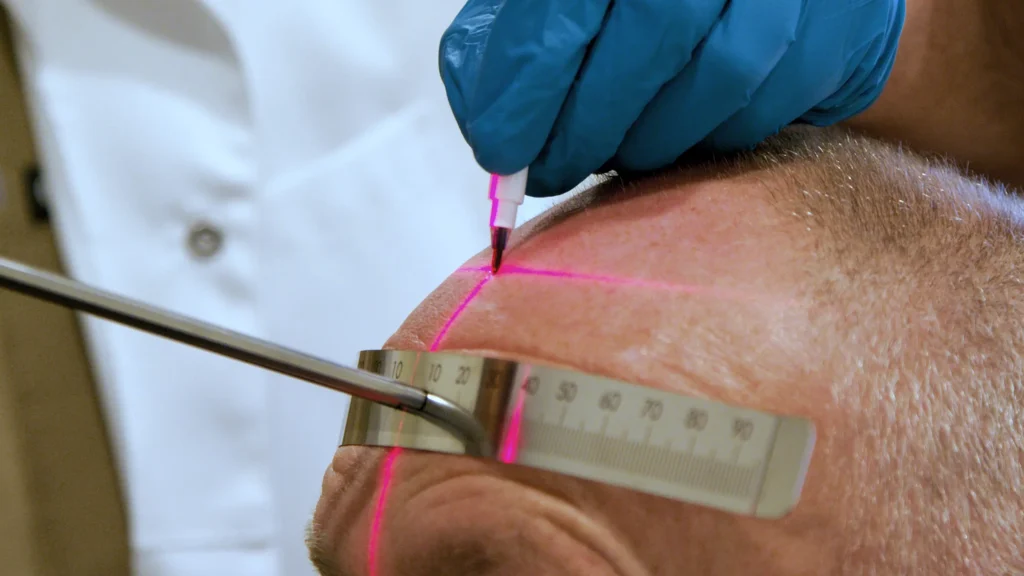
How is the cause of dandruff determined?
During an assessment we look at the type of flake, the condition of the scalp and whether there is an underlying complaint such as eczema.
What can you do about dandruff and flakes?
Depending on the cause, we propose suitable advice or a treatment programme.


Medical guidance
Personal advice on care in the case of persistent or stubborn dandruff.
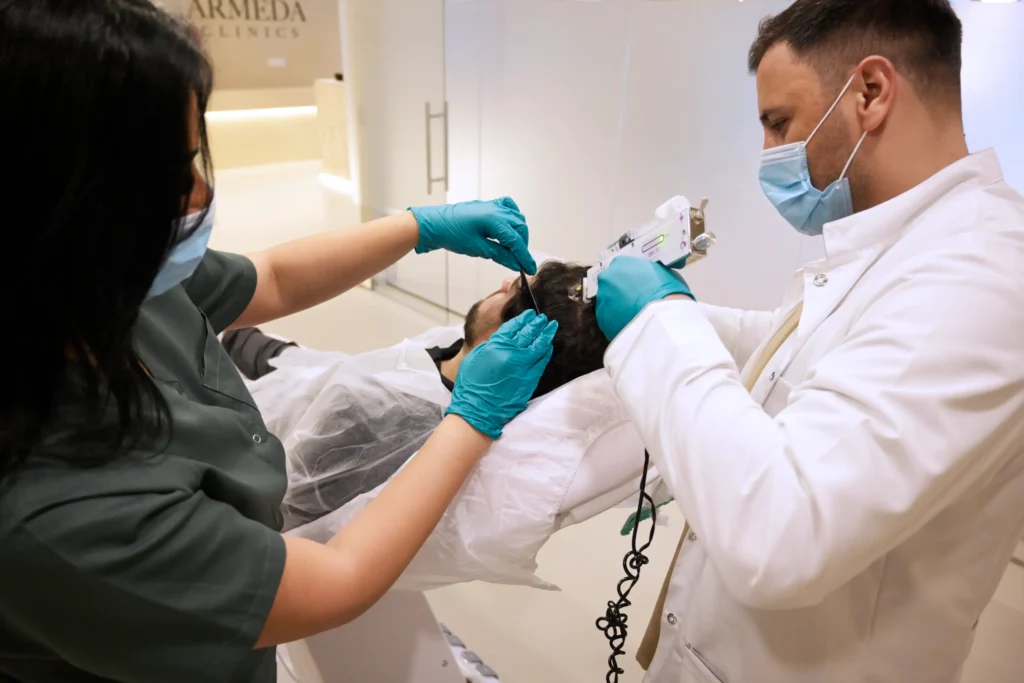
Hair transplant
Where hair growth is permanently affected, this can be an option in the longer term.
What clients often ask us
No, dandruff is not contagious; it arises from a disturbed balance on your own scalp.
Dandruff is mainly about flaking, whereas eczema often also brings red patches and itching with it.
Dandruff itself does not usually cause hair loss, but long-term irritation can keep the scalp out of balance.
This may be down to the type of flake or an underlying scalp complaint that is not being properly addressed.
If the complaint persists despite care, or if itching, redness or hair loss develops as well.
Unsure about the cause of your dandruff or flakes?
Schedule a no-obligation consultation at Armeda Clinics and have your scalp assessed.