


Hair loss in women
Hair loss in women often follows a different course than in men: less concentrated in patches, but clearly noticeable in the overall hair density. Do you recognise any of these situations?
- Have you started losing more hair after giving birth?
- Do you notice changes in your hair around the menopause?
- Does your hair feel thinner across the whole scalp, without a clear spot?
- Do you see noticeably more hair in the shower or in your brush than before?
This form of hair loss is often recognised less quickly than male hair loss, while early guidance really does make a difference.
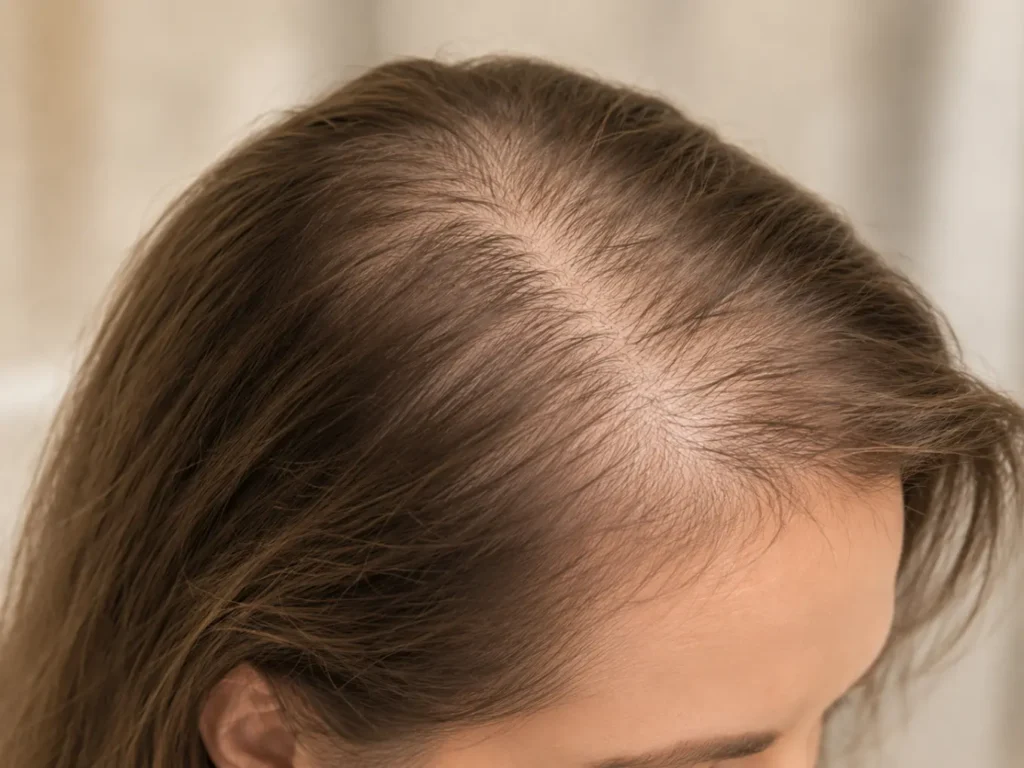
Common causes in women
In women the causes of hair loss often lie in a different area than in men.
Hair loss after pregnancy
After giving birth, many hair follicles shift to the resting phase at the same time, which can cause temporary hair loss.
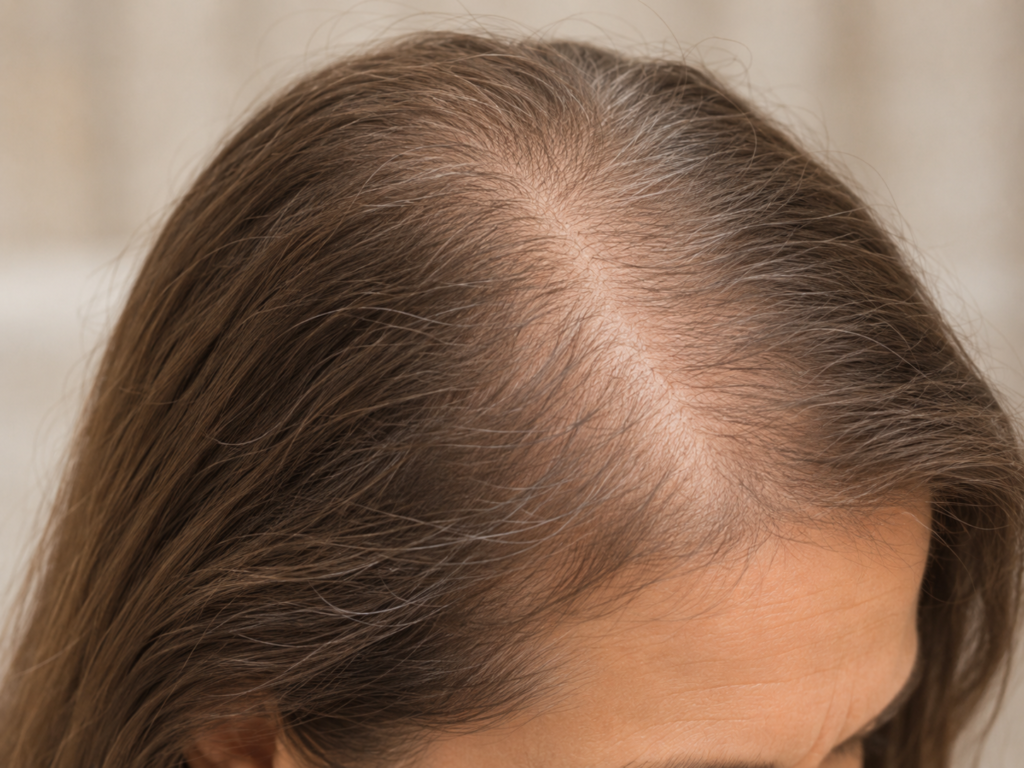
Menopause
Changing hormone levels around the menopause can lead to thinning hair and an altered hair structure.
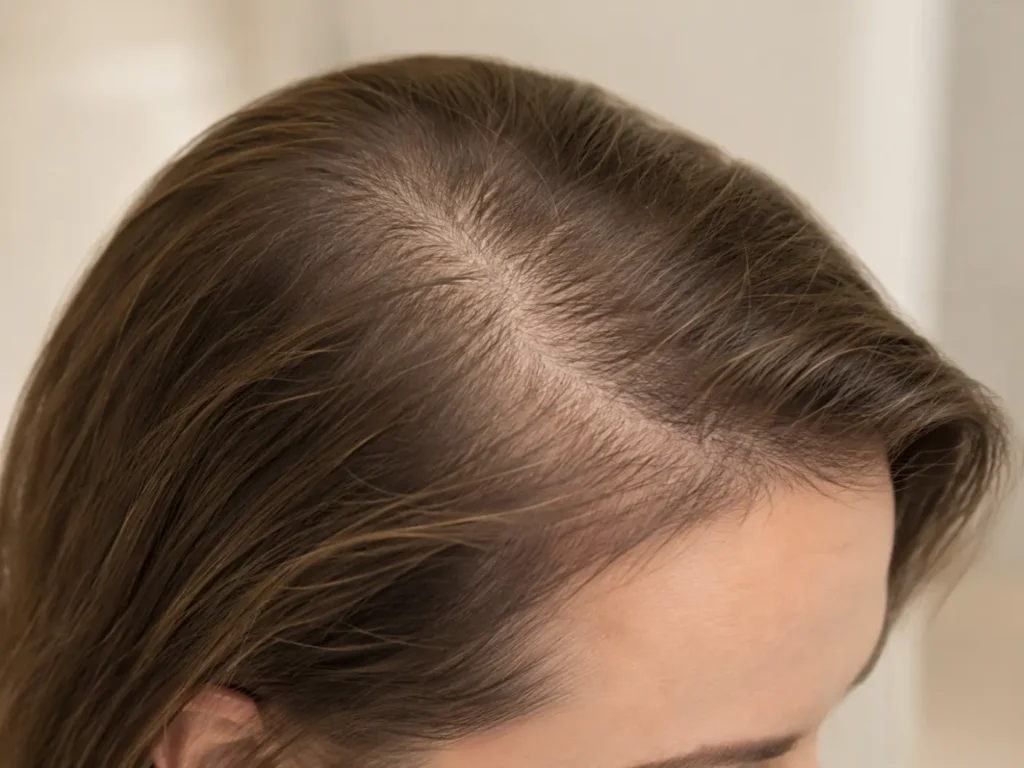
Hormonal changes
Even apart from pregnancy or the menopause, hormonal fluctuations can affect the hair growth cycle.
Diffuse hair loss
Hair loss that occurs spread across the entire scalp, without a clearly bald area.
Why is this a separate area of focus?
Hair loss in women often receives less attention than in men, while the impact can be just as great.
Less recognition
Diffuse hair loss is less visible than a bald patch, which means it takes longer to be noticed.
A different hormonal balance
Oestrogen and progesterone play a greater role than in male hair loss.
Nutrition and health
Iron deficiency and thyroid problems occur relatively more often in women with hair loss.
Emotional impact
Hair loss in women is often experienced as an extra burden, which underlines the importance of good guidance.
How we establish the cause
At Armeda Clinics you map out together with a specialist which of these factors plays a role in your case.
- Hair analysis Your hair density and scalp condition are examined in detail.
-
A personal conversation
Your complaints, medical background and lifestyle are discussed. - Blood values (if needed) If a nutritional deficiency is suspected, further testing may be advised.
- Tailored advice You receive a clear treatment plan, suited to the cause of your hair loss.
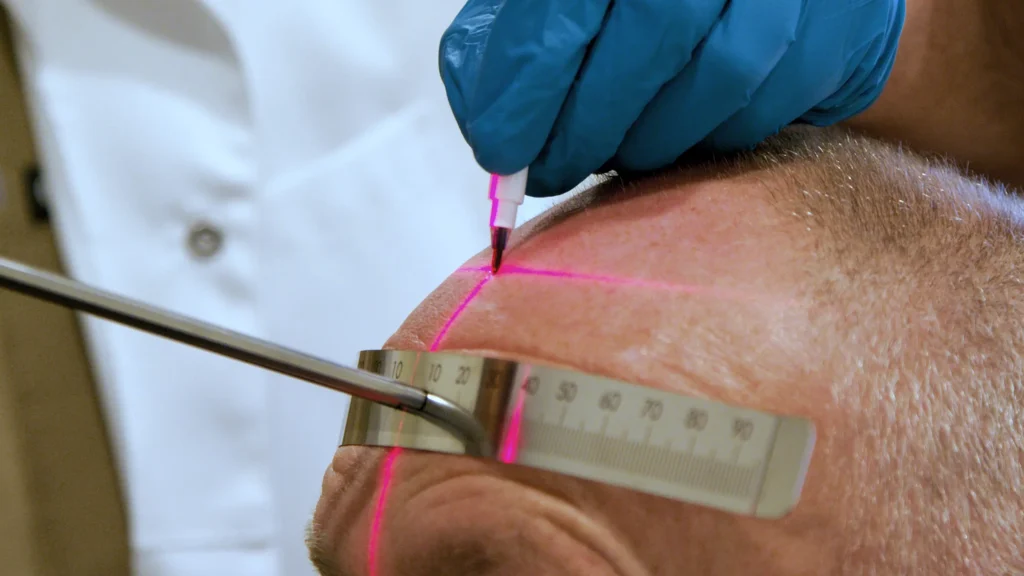
Why have it assessed early?
Because hair loss in women often develops diffusely, it is sometimes only noticed at a late stage. An early assessment provides clarity about the cause and prevents unnecessarily long waiting.
Treatment options for women
Depending on the cause and the extent of the hair loss, we propose a treatment plan tailored to female hair loss.
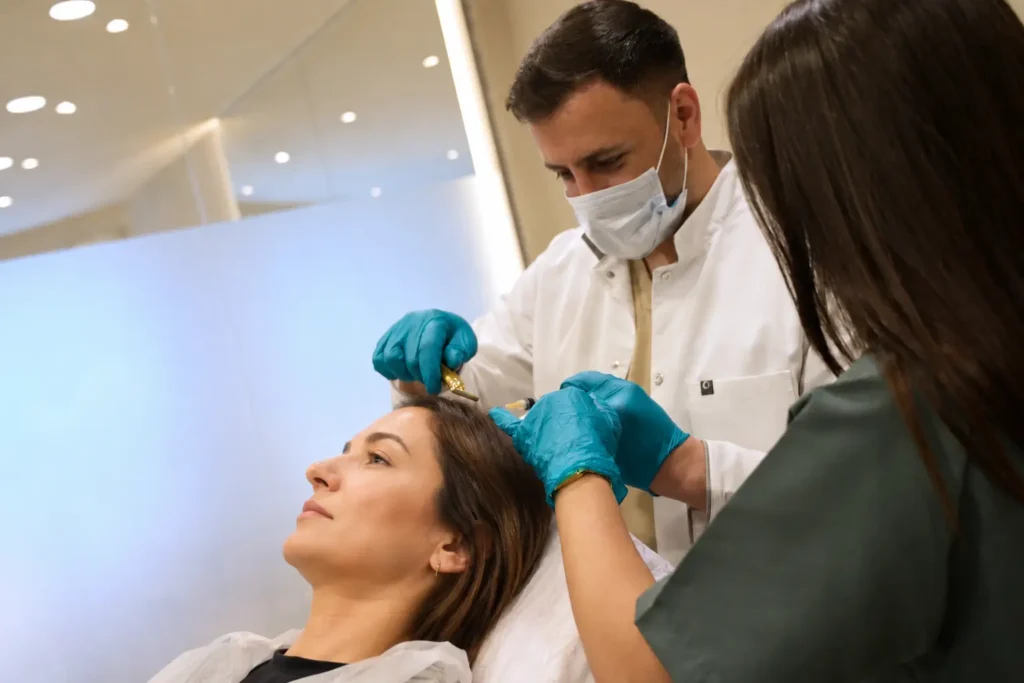
Hair transplant for women
An approach aimed specifically at diffuse hair loss and thinning hair in women.
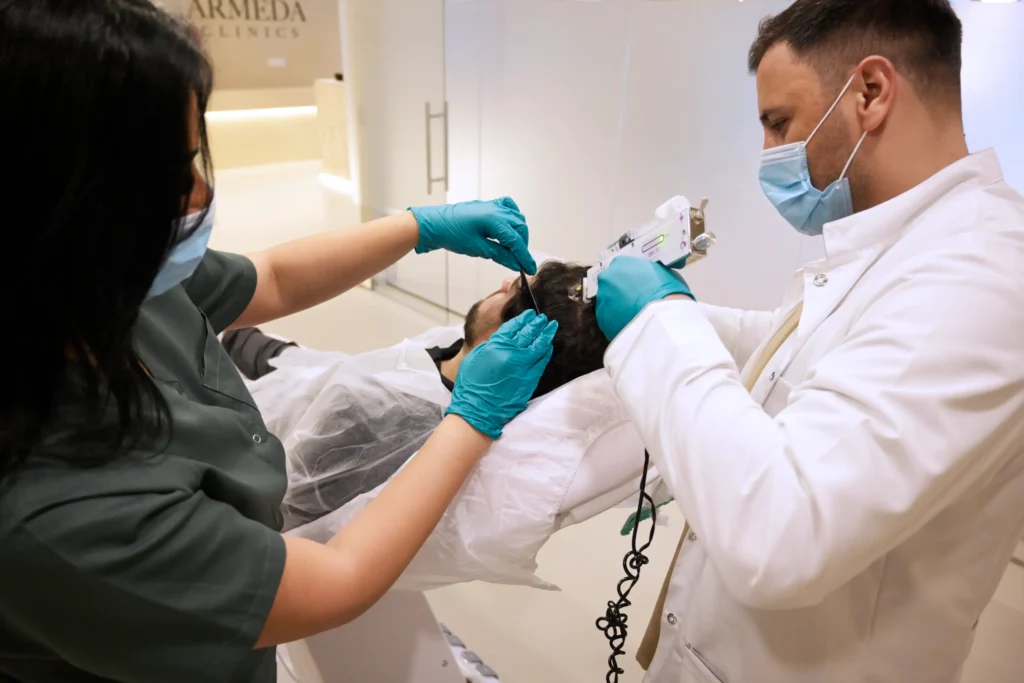
Mesotherapy & PRP
Targeted administration of active substances to stimulate hair growth and improve hair density.

Medical guidance
Ongoing advice and follow-up, tailored to hormonal fluctuations and your stage of life.
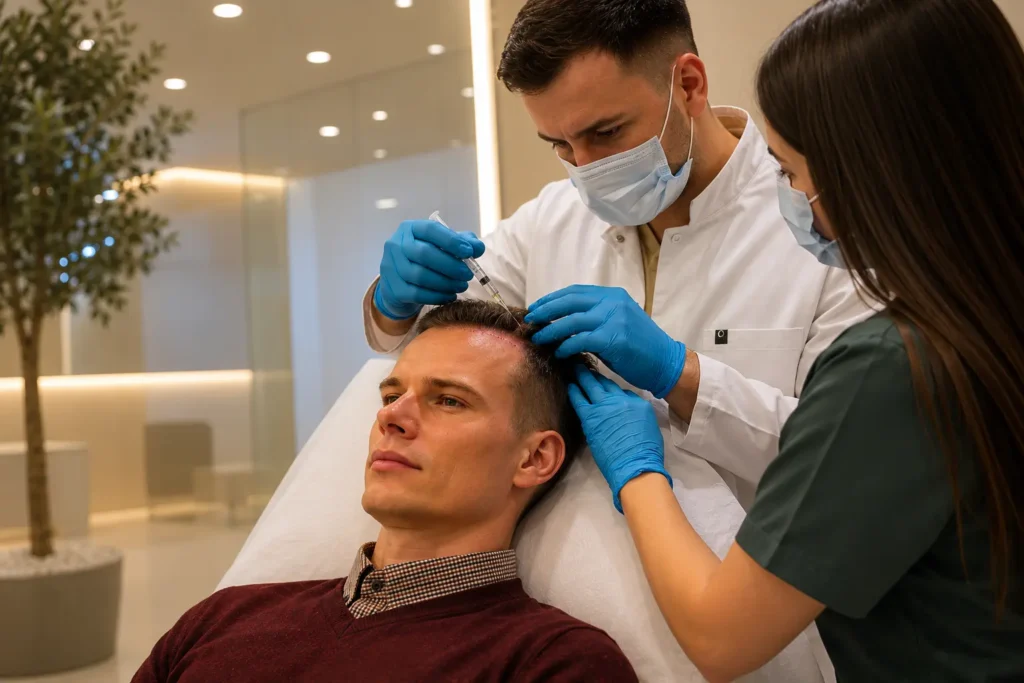
FUE hair transplant
In the case of permanently thin areas, an FUE hair transplant can offer a lasting solution.
What clients often ask us
In most cases the hair growth cycle recovers by itself within a few months after giving birth.
This differs from person to person; hormonal fluctuations can influence hair density for a longer period.
No, diffuse hair loss is spread across the entire scalp, whereas bald patches arise in one specific place.
Yes, with an approach that is tailored to the diffuse pattern that occurs more often in women.
As soon as you notice you are losing appreciably more hair than before, it is wise to have this assessed.
Unsure about the cause of your hair loss?
Schedule a no-obligation consultation at Armeda Clinics and receive personal advice, tailored to female hair loss.